Feelings Don't Age

Dr. Markus Ebner , MSc.
Organizational Psychologist/Founder of the PERMA-Lead Model
Positive Psychology in the second half of life
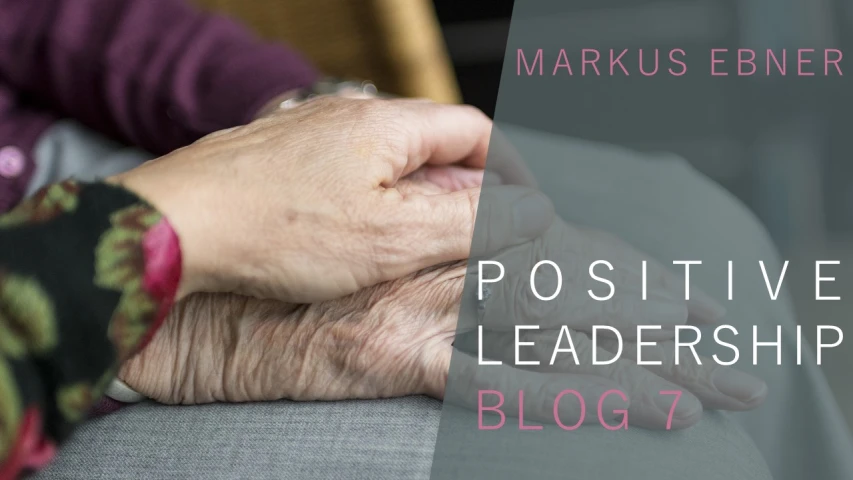
A few months ago, when working in Nuremberg, I met a dear colleague for dinner in a very chic restaurant. Although we were having a good conversation, my attention wandered more and more to the table next to us. A couple from the generation 50+ sat there and both were obviously passionately in love. Literally, they could not keep their hands off each other and were less busy with food than with each other. They reminded me of teenagers first falling in love. This already quite mature couple behaved very unusually in this setting. My colleague finally put it in a nutshell: "Feelings don't age," she said. And how right she is!
When I was 15, I was convinced that at 30–already old from a teenager's perspective–one has emotions well under control or hardly has any emotions . With increasing life experience and a few decades later, of course, I see it completely differently. Emotions form a relevant part of all people, regardless of age. What changes, however, is how we deal with our emotions, and also which emotions we consciously give space to (or which space they take). But what influence do we have on emotions? How did the couple in the restaurant manage, contrary to usual conventions, to give space to their strong and positive emotions? Do we tend to become more satisfied with increasing age, or is the opposite to be expected? And what do people do differently so that joy bubbles up in the second half of life? Positive Psychology deals with questions of this kind.

Positive Psychology - Happiness research for everyday life
Professor Martin Seligman, one of the best-known depression researchers in the world, stated some two decades ago that psychology was mainly concerned with people's suffering, but knew very little about happy people. He therefore called for scientific investigation into happiness, a successful life, extraordinary achievements, i.e. generally positive life histories. He called this research approach "Positive Psychology". His call triggered a strong movement within psychology, and today more than 1000 psychologists worldwide (including me) meticulously research the positive: In addition to those students who need support, psychologist also have an interest in the above-average student. Not only do they investigate the conditions that can lead to burnout, but also those people who, despite very stressful working conditions, show no symptoms of illness. In organizations, they focus on departments with particularly satisfied and healthy employees. Researchers of relationships analyze couples who have happily lived together for many decades. All these studies in Positive Psychology seek to find the "ingredients" for this success. It was logical to pursue the question of what contributes, even at an advanced age, to a successful life.

Tip: You can be your own positive psychologist! Take a close look at your particular successes or happiness with something. Analyze which "ingredients" lead you to positive emotions, a feeling of being more fully alive, or even a sense of meaningfulness.
What makes a life satisfying?
The psychiatrist George Vaillant observes, in a study that has been running for decades, the lives of several hundred people born in the 1940s. He wanted to understand successful aging Defining a succesful life is not easy. Someone can have a fulfilled and happy time and die at the age of 50. Another person turns 90 and looks back on a predominantly bitter or boring life. The number of years lived do not indicate a successful life. Vaillant studied contented elderly people with generally good psychological and physical health. Some had endured misfortunes such as divorces or job losses. Those happiest in their late years of life had used, sometimes unconsciously, coping strategies to deal with these difficult life situations. Happy people at an advanced age have something astonishing in common: Compared to the study’s other participants, they had a significantly more selfless, altruistic, and considerate attitude towards life. Altruism was therefore a major aspect of their lives. Especially happier at old age were those who at the age of 40 or 50 had a lot of responsibility for raising children or caring for parents.
Therefore, relationships have the greatest influence on whether a life proceeds happily. This does not only mean the life partner, but also other people generally involved in one's own life. Studies show that the ability to be empathetic and to be surrounded by other sensitive people plays one of the important roles in happiness. Positive Psychology researches this ability to create the relationships that serve as an important aspect of a fulfilled life. Fulfilling relationships all include a holistic interest in the other person–as opposed to partial interests such as work performance or erotic attraction and so on. Aristotle already differentiated between a "perfect friendship" and a “utilitarian friendship”. High quality relationships involve a general interest in the other person and less focus on the "benefits" that the other brings in a part of life. Ultimately, humans have the fundamental need to be heard, seen, and thus perceived by others as an individual. To this need for recognition belongs the feeling to be important for the other person and not simply an exchangeable pastime.
An essential component of a deep and satisfying relationship is to mutually ensure that the other person feels understood and liked–in the totality of one’s bright and dark sides. By not considering the needs of the other, one hurts an essential part of a nurturing friendship or loving relationship. Adam Grant, an American psychologist, shows in this context that some people tend to be "takers" and others are "givers". A good relationship has a balance and a desire to be a “giver” to the other. Our socialization may largely influence this sometimes-unconscious behavior: Those who have always been pampered at home may never have learnt to recognize the needs of others. And, if you have only been praised when you met the needs of others, then it may be difficult for you to recognize and articulate your own wishes.
By the way: Building good relationships does not mean being surrounded only by people who always agree with you. One of the most renowned American researchers, Carol Dweck, shows that people with a so-called "fixed mindset" especially look for partners who always agree with them and incessantly provide the feeling of being great–and thus these people sacrifice a higher quality of life. However, people with a so-called "growth mindset" prefer relationships with empathetic people who also address mistakes and then lovingly (!) provide support in their further development.
The questions: "How interested are you in the life and needs of the people you spend time with–and how interested are they in your life?" can therefore be a good indication of the quality of your relationships.
Tip: Ask yourself less often what other people do for you and more often what you can do for other people. “It is more blessed to give than to receive”’ is not only a religious motto, but happiness research clearly shows that it makes you happy to support other people. Do not give more space than necessary in your life to people who judge you instead of wanting to understand you; their insecurities about themselves limit their interest in understanding other approaches to life. And be interested in others instead of judging them. Actively approach people; if necessary, expand your circle of friends and acquaintances. Even if you must try what seems to be impossible - it is never too late!

Research also shows that satisfied older people can channel unpleasant emotions, for example through sport, so that they cannot cause any internal damage. This strategy’s effects have been well documented in numerous studies that refer to it as the "UNDO effect". American researchers have found that this behavior unites particularly resistant people with those particularly good at dealing with stressful events. They try not to think about what a solution might look like immediately after a negative event. Instead, they allow themselves a positive distraction before trying to solve the problem. By the way, Vaillant's studies have one particularly surprising result: Statistically speaking, an unhappy or an extremely positive childhood does not have any influence on contentment, health, and length of life. Therefore, the good news is that we have far greater influence on our life course than experiences imprinted on us at a young age.

Tip: Create a list of things or actions you enjoy. This should be both less time-consuming ideas, such as drinking a cup of tea or listening to a certain piece of music, as well as longer-lasting ideas, such as a weekend trip to a spa. If you are looking for a positive distraction after a stressful event, then you have your whole personal UNDO-effect-list!
Accept the frame - And paint your picture
Some people play the "what-if" game during their whole life: If my parents had sent me to a university, then my life would have been successful; if I had married rich, then.... if I were younger, then... if I had more friends....
Of course, some people do live in more favorable conditions than others. Nevertheless, it does not help much to focus mainly on the negative experiences in life. One risks a downward spiral of negative thoughts that increases the feeling of only being a victim, unable to influence one’s own life. Viktor Frankl, a Nazi victim who became one of Austria’s most important psychiatrists, survived four different concentration camps. In his book Man's Search for Meaning, Frankl describes the lifesaving importance of paying attention even in those extreme situations to the little things he could create. He emphasized that people have possibilities for action in every situation, even within a very narrow framework. From his life experiences, he declared, "…everything can be taken from a man but the last of the human freedoms: to choose one's attitude in any given set of circumstances….”
Tip: Do not give more thought than absolutely necessary to life circumstances you cannot change. Instead, focus yourself to those parts in your life you can create. If, however, your thoughts keep getting lost in the unchangeable framework of life, I would like to give you the motto of an American psychologist: You don't have to put up with everything from yourself either!

Four questions you should ask yourself in the evening
Research shows: People satisfied with their lives do not look for great happiness, but consciously notice the small positive moments of everyday life. This is often not so easy in the noise of life. Therefore, a few years ago I developed a simple but very effective technique to end the day with a positive review. My own research and that of other scientists have proven the positive effects of this "4-Evening-Questions" technique.
It works quite simply: For a period of 2 weeks take 10 minutes in the evening, find a comfortable place, and write down everything that comes up as a response to the following four questions:
 You will probably notice through this exercise what brings you joy - and then you can do more of it. This may be like the two lovers from the beginning of this post. The couple confirmed another research result of Positive Psychology: Many people between the ages of 60 and 70 get an extra boost in self-awareness. And that helps you to live more for yourself and to be less influenced by the expectations and judgements of others!
Über den/die Autor*in

Dr. Markus Ebner, MSc.
Organizational Psychologist/Founder of the PERMA-Lead Model
He teaches leadership at several universities and colleges, has written numerous books and publications in this field, and has additional training in coaching, supervision, crisis intervention, social pedagogy, and organizational and team development. In addition to his more than 20 years of work as a trainer, coach and consultant, he is the founder of the PERMA Lead Model and, as one of the renowned European experts on Positive Leadership, is on the Board of Directors of the Austrian Umbrella Association for Positive Psychology. In 2021, he was awarded the Exemplary Research to Practice Award by the World Positive Psychology Association (IPPA) for his work.